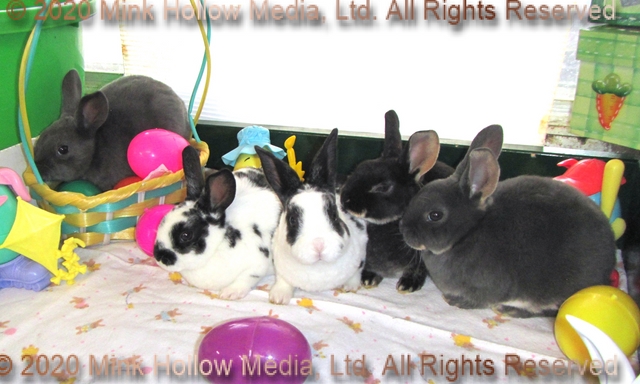
Mink Hollow Rabbitry Blog
Permanent link: http://bit.ly/mhr-blog
In an effort to move away from Facebook more, I am starting a blog. I will post things here that I would normally share on the farm page on FaceBook.
—- watch this space for more —–
Worth Sharing: The Threat of Stillness
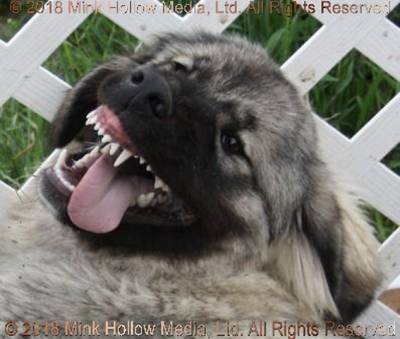 I recall an incident years ago at a dog show. I had a young Rottie bitch and my friend had had her 1/2 sister. We knew they didn't like each other. We were standing away from the show rings, talking, standing about 3' apart. The dogs appeared to be calm, quiet, and minding their own business. At almost the exact same instant, both of us realized that our dogs, who we knew were staring at each other, had shifted their positions slightly. BOTH of us yanked our dogs in opposite directions, yelling at them to “QUIT IT”.
The people around us were shocked - no-one else had noticed anything untoward. They thought we were being mean to our dogs.
WE knew that if we didn't put an end to it right there, it could have been so much worse.
In hindsight, we should have ended our conversation sooner, but we were both pretty young, and still rather inexperienced.
Can Epigenetics Cause Colour to be Expressed Differently?
The University of Melbourne
Epigenetic Control of Gene Expression
While the human genome sequence has transformed our understanding of human biology, it isn’t just the sequence of your DNA that matters, but also how you use it! How are some genes activated and others are silenced? How is this controlled? The answer is epigenetics. Epigenetics has been a hot topic for research over the past decade as it has become clear that aberrant epigenetic control contributes to disease (particularly to cancer). Epigenetic alterations are heritable through cell division, and in some instances are able to behave similarly to mutations in terms of their stability. Importantly, unlike genetic mutations, epigenetic modifications are reversible and therefore have the potential to be manipulated therapeutically. It has also become clear in recent years that epigenetic modifications are sensitive to the environment (for example diet), which has sparked a large amount of public debate and research. This course will give an introduction to the fundamentals of epigenetic control. We will examine epigenetic phenomena that are manifestations of epigenetic control in several organisms, with a focus on mammals. We will examine the interplay between epigenetic control and the environment and finally the role of aberrant epigenetic control in disease. All necessary information will be covered in the lectures, and recommended and required readings will be provided. There are no additional required texts for this course. For those interested, additional information can be obtained in the following textbook. Epigenetics. Allis, Jenuwein, Reinberg and Caparros. Cold Spring Harbour Laboratory Press. ISBN-13: 978-0879697242 | Edition: 1
Worth Sharing: Regenerative agriculture finds solid backing as decades of success show renewal
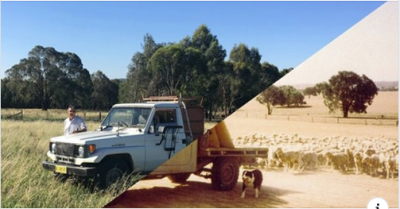
THIS is how we need to do it, and livestock are VERY much a part of the solution. We CAN'T do this if we all try to go vegan. We CAN'T save the planet if we do not continue to grow livestock.
Analyses of histological and transcriptome differences in the skin of short-hair and long-hair rabbits
Has anyone actually decoded the rabbit genome to identify the exact genes responsible for things like coat colour? I am becoming more convinced that the traits we have identified as “genes” are not, in fact single genes - at least, not always. I think at least some are in fact multiple genes that are on the same locus (so they tend to get passed on together). Some traits can be the result of different genes, but they LOOK the same so we assume the are the same.
“In addition, by RNA sequencing, we identified 951 genes that were expressed at significantly different levels in the skin of short-hair and long-hair rabbits. Nine significantly differentially expressed genes were validated by quantitative real-time polymerase chain reaction.”
Background
Hair fibre length is an important economic trait of rabbits in fur production. However, molecular mechanisms regulating rabbit hair growth have remained elusive.
Results
Here we aimed to characterise the skin traits and gene expression profiles of short-hair and long-hair rabbits by histological and transcriptome analyses. Haematoxylin-eosin staining was performed to observe the histological structure of the skin of short-hair and long-hair rabbits. Compared to that in short-hair rabbits, a significantly longer anagen phase was observed in long-hair rabbits. In addition, by RNA sequencing, we identified 951 genes that were expressed at significantly different levels in the skin of short-hair and long-hair rabbits. Nine significantly differentially expressed genes were validated by quantitative real-time polymerase chain reaction. A gene ontology analysis revealed that epidermis development, hair follicle development, and lipid metabolic process were significantly enriched. Further, we identified potential functional genes regulating follicle development, lipid metabolic, and apoptosis as well as important pathways including extracellular matrix-receptor interaction and basal cell carcinoma pathway.
Conclusions
The present study provides transcriptome evidence for the differences in hair growth between short-hair and long-hair rabbits and reveals that lipid metabolism and apoptosis might constitute major factors contributing to hair length.