
Mink Hollow Rabbitry Blog
Permanent link: http://bit.ly/mhr-blog
In an effort to move away from Facebook more, I am starting a blog. I will post things here that I would normally share on the farm page on FaceBook.
—- watch this space for more —–
Worth Sharing: Better diagnostic imaging for pet rabbits

Source: Genevieve Rajewski, Tufts University https://phys.org/news/2019-08-diagnostic-imaging-pet-rabbits.html
Gastrointestinal issues are the most common emergency that brings pet rabbits—the third most popular companion small mammal in the U.S.—to the Foster Hospital for Small Animals.
Bunnies develop life-threatening complications quite easily from stress, improper diet, dental disease, exposure to toxins such as lead, and other common circumstances. “They are very sensitive little animals,” explained Associate Professor Jennifer Graham, head of the Zoological Companion Animal Medicine Service at Cummings School. “When it comes to GI problems, rabbits can die in a much shorter period than dogs or cats. If a rabbit hasn't eaten or pooped in twelve to twenty-four hours, the owner needs to get it to a clinic right away.”
However, many GI diseases and problems outwardly look the same in pet rabbits. Knowing if—and how—the gut is functioning could help veterinarians narrow the list of possible causes to begin treatment.
With that in mind, Graham and her research partners at Cummings School recently studied if ultrasound can reveal normal movement, or motility, of pet rabbits' gastrointestinal system.
Similar studies have been done in humans, horses, and dogs, and as a result, their clinicians use ultrasound to look at movement of the GI tract to evaluate motility. With the information on normal motility, ultrasound can better be used to differentiate underlying diseases and conditions.
For the bunny study, the researchers used ultrasound to look at the GI tracts of ten healthy pet rabbits brought to the Foster Hospital for routine wellness exams. They also used ultrasound to look at the GI tract in eleven rabbits being spayed and neutered at the Foster Hospital, both before and after the pets were sedated.
“If sick bunnies are painful and stressed, we may use a sedative to help make them more comfortable,” explained Graham. “We wanted to know if sedatives affect the motility of a rabbit's GI tract to the point that it changes what we see with ultrasound.”
In the July issue of the American Journal of Veterinary Research, the researchers reported that ultrasound indeed can accurately show normal motility in pet rabbits' small intestines. Ultrasonography also appeared an accurate way to assess the movement of the small intestine, regardless of whether the rabbits had been sedated.
The research helps pave the way for veterinarians to better use the imaging technique to diagnose rabbits with GI symptoms. Ultrasound can have some benefits over radiographs—X-rays—both of which are noninvasive methods commonly used to look at rabbits' GI systems.
For starters, “we may be able to perform some ultrasounds with a rabbit sitting upright as it normally might, versus having to stretch it out to take radiographs”—positioning that can require the pet to be sedated, added Graham. While radiographs can reveal a buildup of gas in a pet rabbit that points to a problem, they do not show the movement of the GI tract. “So ultrasound gives us information on how the intestines are actually working versus providing a static image,” Graham said.
She explained that this information is key to distinguishing between when GI symptoms are caused by something blocking the intestines, versus GI stasis, which is when the intestines having slowed down or stopped contracting normally because of another underlying issue.
Currently, veterinarians often perform exploratory surgery to get to that answer in species such as dogs and cats. Surgery is much riskier in rabbits and best avoided unless absolutely necessary; Graham hopes this study will help some rabbits avoid unnecessary surgery.
Whether veterinarians can take the team's findings and build on them to apply ultrasound to diagnosing sick rabbits, of course, remains to be seen, Graham said. “But the first step is always determining a baseline for normal.”
Worth Sharing: The Visible Bunny
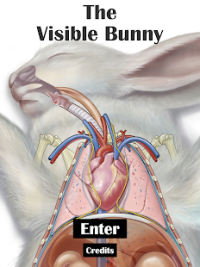 This app allows users to view different aspects of the bunny's anatomy to fit their needs. It is especially useful for a surgeon to show clients where and they might be working by turning on particular layers of the bunny's anatomy. Along with showing different views of the anatomy, this app also allows the user to draw on top of the image. This feature can aid the user in circling certain parts of the anatomy, or writing text. There is also a save image feature that allows the user to save views to their device, which can be sent via email or text at a later date. These images are saved in a folder called The Visible Bunny in the Android pictures folder.
Worth Sharing: Busting the Genetic Testing Myths
 MIXED BREEDS ARE NOT HEALTHIER
First of all, mixed breeds are not healthier than purebred dogs.
“The most frequent genetic disorders that we see in practice are seen equally between purebreds and mixed breeds,” Bell said.
Second, there is a heritability factor in many diseases we had not previously considered. Bell talks specifically about studiesindicating even something as seemingly obviously traumatic as cruciate ligament tears have a genetic component.
Third, all breeders should be health testing their dogs. The increasing number of DNA tests available enables breeds with simple recessive gene pairs creating disease to quickly and easily apply positive pressure to the pedigree. Breeding a quality carrier status animal to a clear, then breeding the resulting quality clear offspring, Bell said, will rapidly eliminate diseases such as a specific form of Progressive Retinal Atrophy.
“And that’s really the take home message for today,” Bell said. “Is that anyone that’s doing breeding must be doing breed specific genetic testing of the parents and if they’re not doing that then they should not be breeding. Then they are not an ethical breeder and not a health conscious breeder and there’s no place today for breeders that are not going to do that.”
Fourth, for complex inherited diseases, in which a combination of genes is causing a disease process to be expressed, the OFA/CHIC database offers the opportunity to research a “vertical pedigree” to study the incidence of disease in the entire family of the dogs being considered for breeding. OFA IS FACEBOOK FOR DOGS
“So when you look up at dog’s web page on the OFA Website,” Bell said, “and this is Facebook for dogs, this is the dog’s own individual website. They can have their picture on there, it has all their information. It has all the information of the tests results from the parents from the siblings from the half siblings. … even in a normal individual that you’re looking at for breeding, if the parents or the parents’ siblings (indicate) more disease present, it tells you that you’re going to have a greater genetic load of liability genes for that particular disorder.”
Finally, using health testing *appropriately* is mission critical. Bell noted that breeders' selection processes should emphasize only those diseases which are of concern within their respective breeds. He presented an outstanding webinar for the AKC Canine Health Foundation available here which goes in to even greater detail on this topic.
"…people might say that because (our dogs) purebred they have limited diversity and therefore they’re unhealthy," Bell said. "And that is not true."
YouTube: Animal Emotions
Michael Shermer with Dr. Frans de Waal — Animal Emotions and What They Tell Us about Ourselves (#57)
<html> <iframe width=“560” height=“315” src=“https://www.youtube.com/embed/TZSUSaftipU” frameborder=“0” allow=“accelerometer; autoplay; encrypted-media; gyroscope; picture-in-picture” allowfullscreen></iframe> </html>
CBC Documentary: Remarkable Rabbits
Worth Watching!
Almost every continent on Earth is home to a tenacious family of creatures so adorable that it rarely gets the respect it deserves.
Rabbits and hares are best known for sporting pocket watches and velveteen coats as beloved storybook characters, and for their impressive ability to procreate.
But if you delve deeper, you’ll see that real rabbits and hares are far more fascinating than you ever imagined.
These keystone species play a vital role in ecosystems from the Rocky Mountains to the deserts of Arizona to the northern reaches of Canada’s frozen boreal forest to the concrete jungle of downtown Chicago.
There are more than 60 different kinds of wild rabbits and hares, but despite their remarkable ability to reproduce, many species are actually in danger of being eradicated.
MORE: The cutest rabbit in the world is on the brink of extinction Meet the world's biggest bunnies
In Remarkable Rabbits, we’ll explore the close relationships rabbits and hares have with the landscapes they call home. We’ll learn how hares are more than just a rabbit of another colour, and we’ll take to the water to learn how the swamp rabbit — the Michael Phelps of the rabbit world — has managed to survive in its ever-changing environment.
We’ll also join scientists in the field as they work tirelessly to save native rabbit species from the brink of extinction and reveal groundbreaking new discoveries about how snowshoe hares — the seemingly vulnerable balls of fur that are on many animals’ dinner menus — turn the tables on their predators and control the game.
MORE: Can you tell the difference between a rabbit and a hare? 17,000 rabbits vie for the top spot of “Best in Show” Rabbits at risk: Some species are among the most endangered mammals on the planet
Remarkable Rabbits challenges the common misconception that the world is awash with bunnies, as we explore the threats rabbits and hares face in the wild, from habitat loss to climate change.
But it also shows why, even though their numbers are down, we shouldn’t count these important and underrated animals out. For it’s the rabbits and hares that can adapt, the ones that can move and change with the times, that may prove themselves to be the ultimate survivors.